Family Business Matters
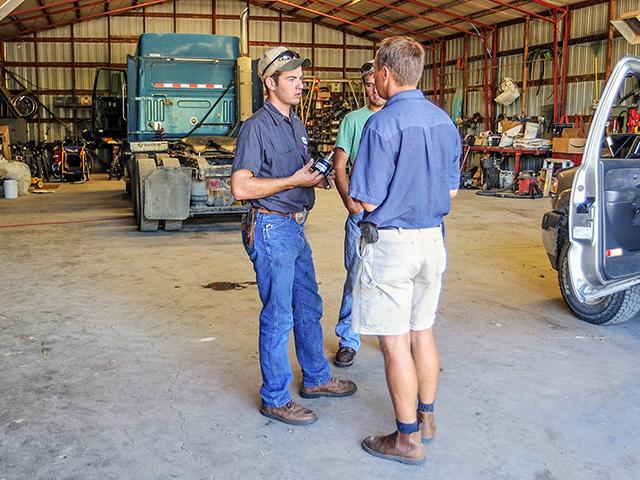
Business transitions between generations can be challenging. Not only are there distinctive perspectives and communication styles -- think "boomers" versus "millennials" -- the senior and younger generations bring different strengths to the table. While these strengths can be complementary, they are also diverse enough to pose problems.
Members of the senior generation have decades of wisdom gleaned from experience. They know what works and what doesn't, where problems might lie and the shortcuts and workarounds to difficult farming or ranching conditions that can emerge every few years. They've dealt with employees, vendors and landowners on a recurring basis. As the old saying goes, "Good judgment comes from experience, and experience comes from bad judgment."
The younger generation brings energy and creativity, fresh ideas and the ability to work long hours. They often have more native instincts with technology and adapt quickly to change. They bring what psychologist Raymond Cattell called "fluid intelligence," the ability to learn, reason and solve problems. The senior generation has more "crystallized intelligence," which uses accumulated wisdom and knowledge to accomplish tasks.
Problems arise in how these strengths emerge in the workplace. If the senior generation moves too quickly to solve every challenge, the younger generation can feel stifled, sensing a lack of confidence from the senior generation. But, if the younger generation doesn't move quickly enough to fix what the older generation clearly sees, or if they don't ask for the senior generation's input, the older generation feels frustrated and not respected for their knowledge.
Here are a few strategies to balance the high-quality input of the senior generation with the emerging confidence of the younger generation.
-- Give the younger generation space to solve problems. Take a vacation, leave for periods of time to travel or visit friends, and generally remove yourself from the operation at regular intervals so you don't have to watch the younger generation solve problems and be tempted to step in.
-- Don't correct every mistake you see. I once heard this described as only getting involved in a management decision if something is "going off the rails." Otherwise, hold back from corrective behavior. They need to learn from their mistakes.
-- Separate your financial interests. If all your income is dependent on the performance of the farm, it is harder to step away from operational decisions. Use land or machinery rent, and retirement funds for living expenses instead of a salary or profit distributions.
For the younger generation, here are some ideas you can use to foster the success of the senior generation's transition.
-- State clearly where you would like the senior generation's help. While it can be hard to "boss" family members who are older than you, it is important to focus their energy on where they can be the most helpful, so they don't step on your toes or cause friction in the operation. Tell them where they are needed. Ask them to participate in specific discussions.
-- Ask the senior generation to teach, document or share what they know. What do they know that you may not fully grasp? Request they focus on teaching in those areas. One family I know approached its father's skills and knowledge about irrigation to teach better water management on rice fields.
-- Encourage off-farm activities. Ask them to spend time with grandkids. Encourage them to volunteer, serve on local or industry boards, or spend time with friends. Ask them to write about their history or document their life story. These activities focus one's sights beyond work or material interests, providing a sense of purpose later in life.
For the senior generation, making a transition out of the business they've grown over decades only happens once. Discuss strategies both generations can use to help your family business during this important period.
Lance Woodbury can be reached at lance.woodbury@pinionglobal.com
(c) Copyright 2026 DTN, LLC. All rights reserved.