Bridge Payments Help, But Pain Persists
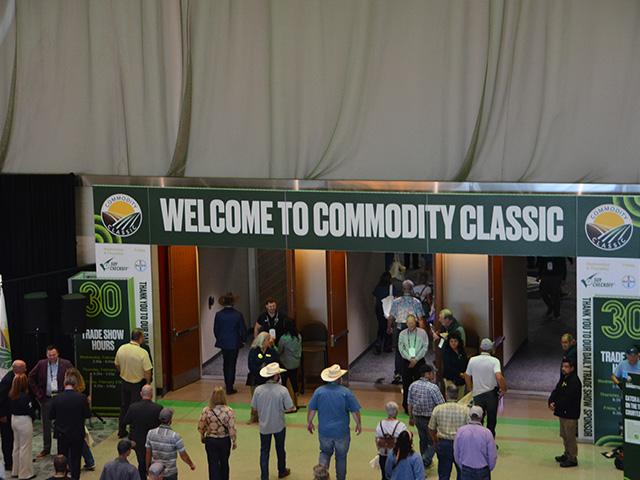
SAN ANTONIO (DTN) -- On the opening day of Commodity Classic, there were some angry conversations between farm leaders and representatives of major fertilizer, seed, chemical and machinery companies.
"Things were heated, then we calmed down and tried to find some common ground," said Jed Bower, an Ohio farmer and president of the National Corn Growers Association (NCGA). "They claim there are supply chain issues because they're not solely based in the U.S. I understand that and we've all heard that. There are other companies that aren't having quite the same issues because they are sourcing from different areas. At the end of the day, that doesn't help farmers at all. So, a lot of our conversations have been voicing our frustrations -- personally and what we've heard from other growers -- to these companies."
The frustration levels are high as farmers are moving into their fourth year of a continued cycle of low commodity prices and stubbornly high input costs. Leaders such as Bower and others note there are no "silver" or "magic" bullets for managing through the downturn.
"My strategy has been pretty poor. I still have to buy a lot of inputs," Bower said. "I've been hoping there would be a correction, but hoping is not a strategy. Unfortunately, with the economy we're in, that's where my operation is. We're only buying things as we absolutely need them right now, including inputs."
Farmers are starting to get some relief now from the Farmer Bridge Assistance (FBA) program. Richard Fordyce, USDA's undersecretary for farm production and conservation, said USDA processed more than 35,000 online applications in just 72 hours since enrollment for FBA opened on Monday. That totaled $1.7 billion of the $11 billion in FBA funds.
"We are ecstatic about that," Fordyce said.
Zippy Duvall, president of the American Farm Bureau Federation, said diversification helped him in the 1980s by adding a poultry operation to his farm. Talking to younger farmers, he said he is encouraging them to see if there is a niche they might be able to fill on their farm. "But not everybody is in a situation where they can diversify," he said. "A lot of times diversification depends on your location."
Duvall also said he's had repeated conversations with equipment and fertilizer companies echoing many of the same complaints other farmers are raising. He encouraged companies to be more transparent in explaining why inputs are increasing when commodity prices remain flat.
"We need each other and they need to do everything they can in their power to be able to help us get through this so that we'll still be their customers on the other side," Duvall said.
Duvall said he is pleased the FBA payments are going out, but he also believes there remains a need for greater aid and expects Congress will act.
"There are a lot of conversations about another aid package coming out of Capitol Hill," Duvall said. "There have also been more discussions at USDA. I feel like everybody in this administration understands the need and difficulties farmers are having."
Duvall also added some export movement from trade deals and policies such as year-round E15 are going to help farmers from the demand side.
Liquidity continues to erode on farms, said Natasha Cox, senior vice president of agricultural lending at Farm Credit Mid-America. While noting the losses in corn and soybeans, she also pointed to cotton and rice crop losses. Farmers are more closely examining their inputs, equipment costs and whether they are in a position to diversify.
"We're seeing pressure on balance sheets. Most of our producers, especially in the Eastern Corn Belt, have strong real-estate values that are holding up their balance sheets today," Cox said. Still, she added, "Liquidity is eroding at a very fast rate, especially in the Corn Belt."
Chris O'Connor, general manager of Willamar Cotton and Grain in Texas, said forward contracting and marketing at the right time continue to matter. He said the farmers faring better in his area are watching to see when they can sell above, or perhaps a little below their costs.
"Those guys who have done that are doing better -- they're not doing great -- they're doing better than the guys who have tried to shoot for the moon and say, 'Well, I really need this high price to go and wipe out my debt.' They've been realistic at attainable prices, especially in this environment."
Dave Walton, an Iowa farmer and vice president for the American Soybean Association, said he is looking harder at fertilizer costs and application rates on his own farming operation.
"We're at historic highs on fertilizer so the ROI (return on investment) on some of those fertilizer inputs is not there," Walton said. "I'm looking at cutting back rates, almost to zero in a lot of cases where we have good soil tests. I understand a lot of other guys are looking at doing similar things. They are cutting back rates where they can and being a lot more judicious about their fertilizer."
Walton also participates in a cover crop program through the Soil and Water Outcomes Fund through the Iowa Soybean Association. He's seeing that he can cycle nutrients through the cover crops in a way he might not have been able to tap into before, and he's being incentivized to grow cover crops.
"So, it's one of the keys to our operation is cutting back on those fertilizer rates," Walton said.
Walton also has some diversity in his operation as a cow-calf producer and is growing that side of the business now.
"We've expanded the cow herd -- the beef side of things," he said. "As long as it's profitable, we're going to continue to lean into that more. We expanded last year and we're expanding this year, and staying diversified has always been a benefit to us."
Jamie Kress, an Idaho farmer and president of the National Association of Wheat Growers, said winter is normally a time to reset, take a step back and refocus, but the overall costs of equipment, repairs and inputs are weighing heavier now.
"It's painful right now when you are going to pay these part bills and you are doing your budget with your banker," she said. "These things look different for all of us but the opportunity to have a good profit margin and to get ahead is just about impossible for anybody to find right now. It's a very difficult time right now to be a farmer."
Kress also said the bridge payment is going to be critical to help farmers try to cash flow their operations until next fall. "The bridge gets us to that point," she said.
Chris Clayton can be reached at Chris.Clayton@dtn.com
Follow him on social platform X @ChrisClaytonDTN
(c) Copyright 2026 DTN, LLC. All rights reserved.